Description
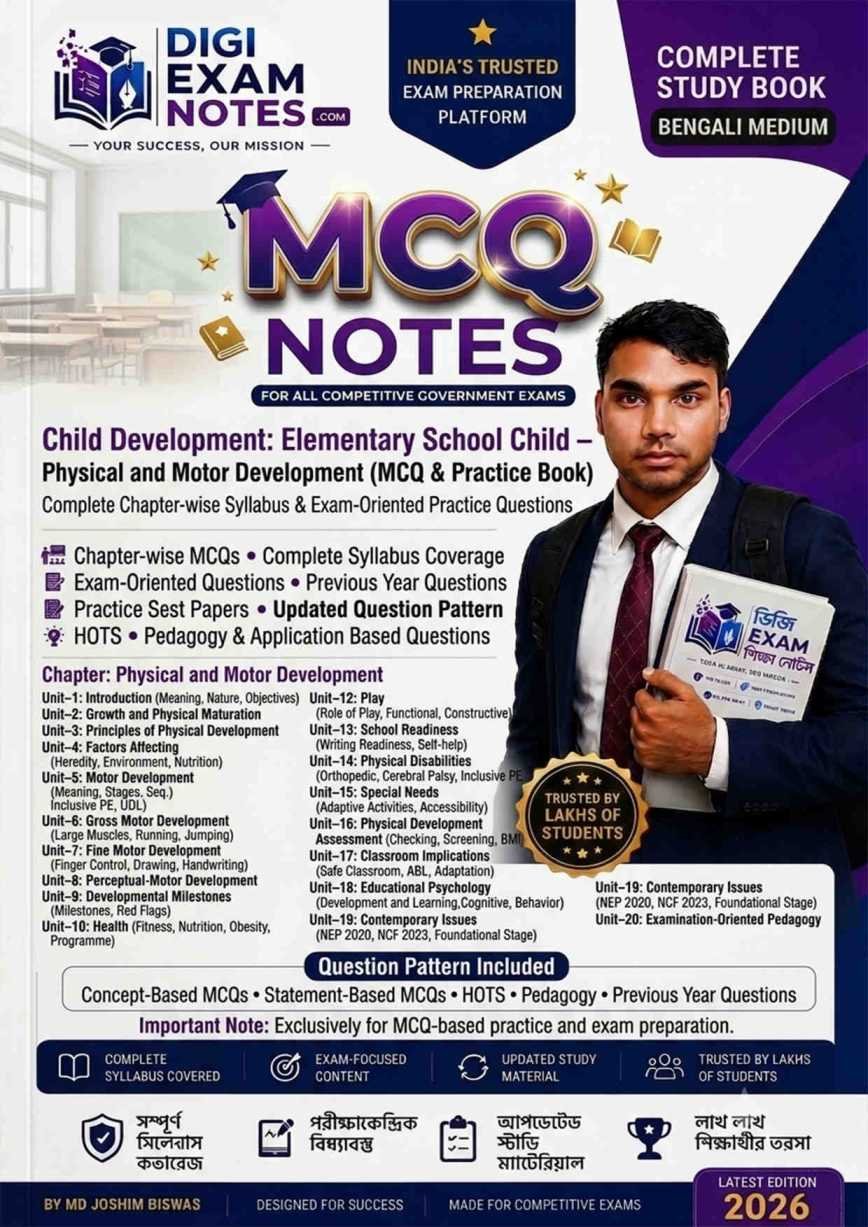
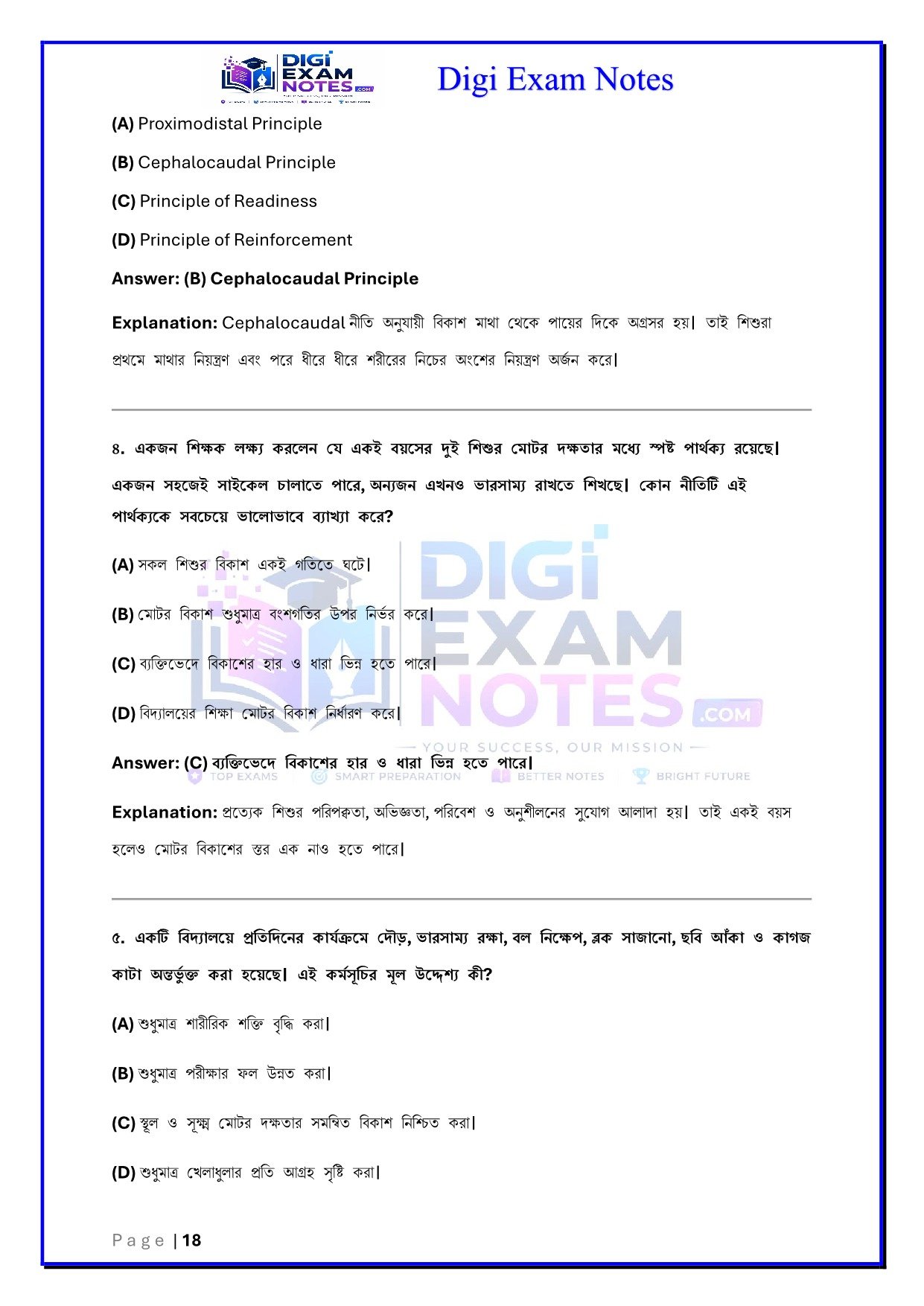
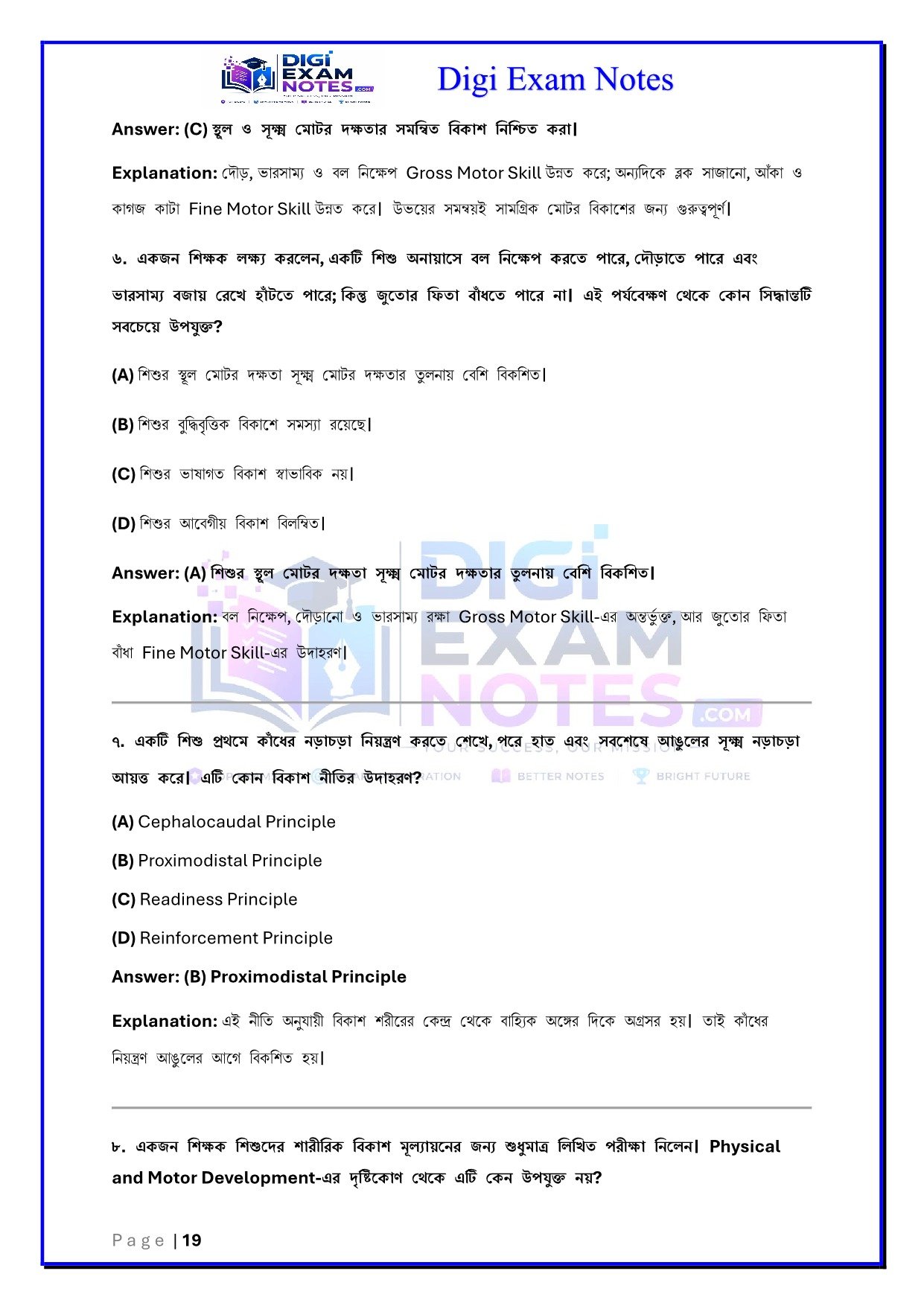
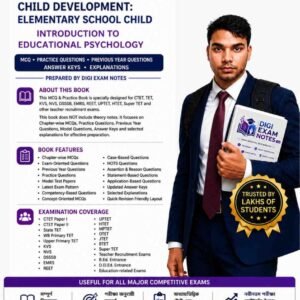
Digi Exam Notes Elementary School Child – Physical and Motor Development (MCQ & Practice Book) 2026 , Mastering physical and motor development in elementary school children is essential for scoring top marks in competitive teacher eligibility and recruitment exams. Physical and Motor Development (MCQ & Practice Book) by Digi Exam Notes provides a structured, high-yield collection of practice questions designed to test your knowledge and sharpen your problem-solving speed.
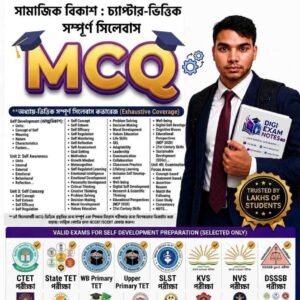
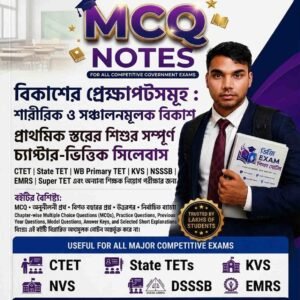
This dedicated guide covers the entire spectrum of Physical and Motor Development across 20 detailed units—from growth patterns, motor milestones, and play-based learning to inclusive physical education, developmental screening, and educational psychology integration..
Key Features of the Book:
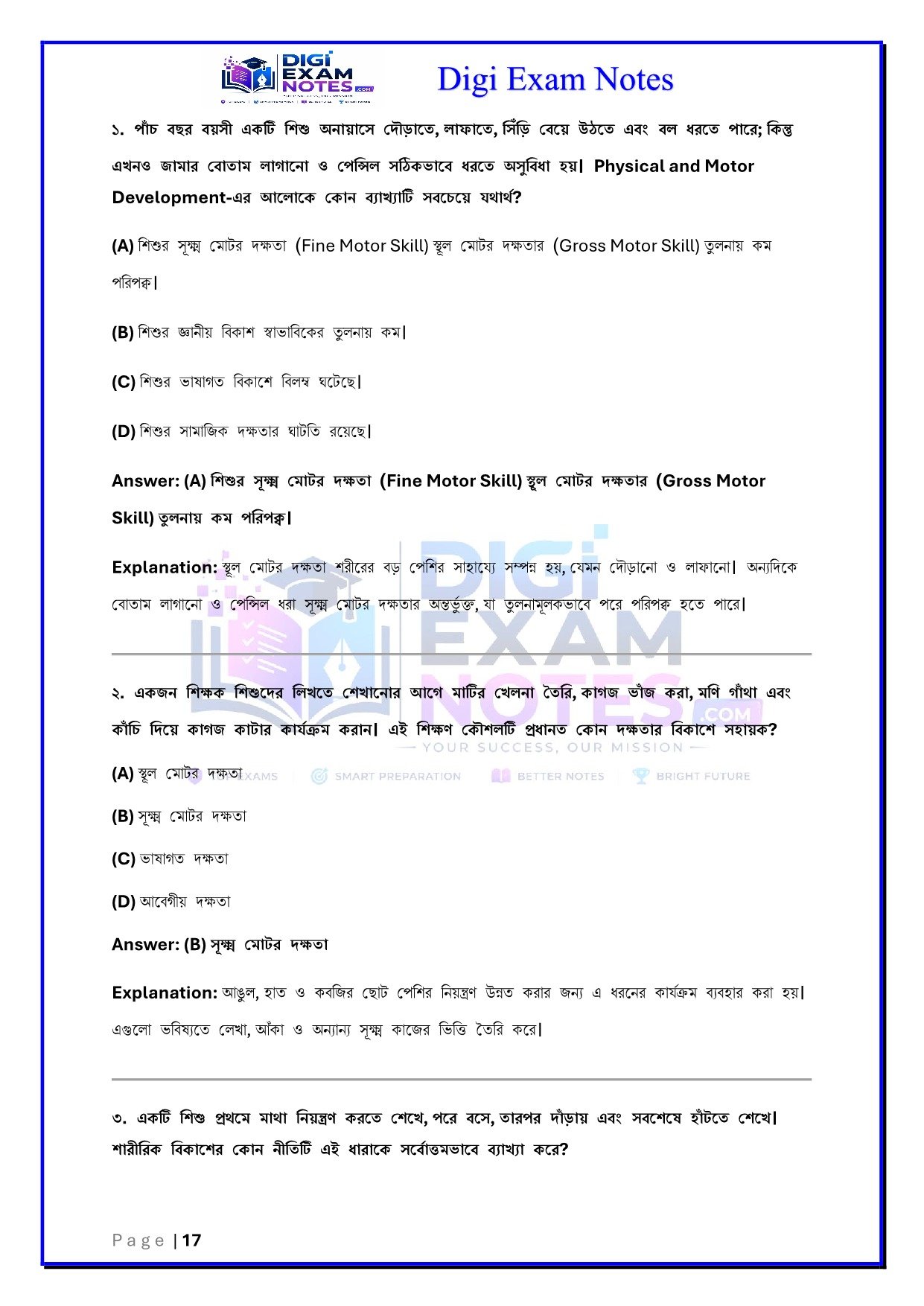
• 100% Exam-Oriented Practice: Exclusively prepared for MCQ practice, self-assessment, and exam revision without unnecessary lengthy theory.
• Complete 20-Unit Syllabus Coverage: Exhaustive practice modules covering Motor Readiness, Developmental Milestones, Health & Hygiene, Physical Disabilities, CWSN, and Classroom Adaptations.
• Diverse Question Formats: Includes Statement-Based MCQs, Assertion & Reason Questions, Teacher Decision-Making Scenarios, Case Studies, and Competency-Based HOTS questions.
• Standard Curriculum Reference: Questions framed according to NCERT, SCERT, NCF 2005, NCF 2023, NEP 2020, NIOS, B.Ed., D.El.Ed., WHO Child Growth Standards, and UNICEF resources.
• Answer Keys & Selected Explanations: Precise answer keys paired with concise explanations for fast concepts retention.
Topics & Syllabus Covered across 20 Units:
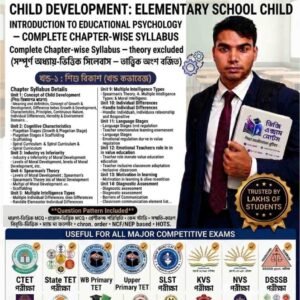
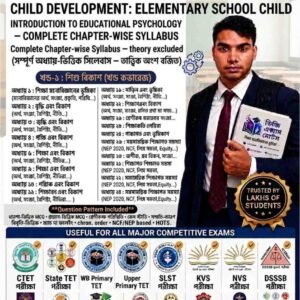
• Unit 1: Introduction to Physical Development (Meaning, Scope, Nature, Objectives & Educational Significance)
• Unit 2: Growth and Physical Maturation (Growth Patterns, Growth Spurts, Biological Maturation, Skeletal & Nervous System Development)
• Unit 3: Principles of Physical Development (Cephalocaudal, Proximodistal, Sequential, Continuous & Individual Variation)
• Unit 4: Factors Affecting Physical Development (Heredity, Environment, Nutrition, Hormones, Exercise, Sleep & Socio-economic Status)
• Unit 5: Motor Development (Meaning, Stages, Sequence, Principles & Developmental Importance)
• Unit 6: Gross Motor Development (Large Muscle Development, Walking, Running, Jumping, Climbing, Throwing, Balance & Agility)
• Unit 7: Fine Motor Development (Small Muscle Control, Pencil Grip, Handwriting Readiness, Cutting, Folding & Eye-Hand Coordination)
• Unit 8: Perceptual-Motor Development (Visual-Motor, Auditory-Motor, Spatial Awareness, Directionality & Kinaesthetic Awareness)
• Unit 9: Developmental Milestones (Physical & Motor Milestones, Age-wise Milestones, Red Flags & Early Identification)
• Unit 10: Health and Physical Development (Physical Fitness, Hygiene, Balanced Diet, Malnutrition, Obesity & School Health Programmes)
• Unit 11: Physical Activity and Exercise (Daily Exercise, Outdoor Play, Physical Education, Yoga, Sports & Fitness)
• Unit 12: Play and Motor Development (Types of Play, Functional, Constructive, Outdoor & Play-based Learning)
• Unit 13: School Readiness and Motor Readiness (Physical Readiness, Writing Readiness, Self-help & Independence Skills)
• Unit 14: Physical Disabilities and Motor Challenges (Orthopedic Impairment, Cerebral Palsy, Muscular Dystrophy, UDL & Adaptations)
• Unit 15: Children with Special Needs – Physical Perspective (CWSN, Mobility Challenges, Adaptive Physical Activities & Inclusive Sports)
• Unit 16: Physical Development Assessment (Observation, Growth Charts, Height/Weight, BMI & Fitness Assessment)
• Unit 17: Classroom Implications (Role of Teacher, Safe Classroom Environment, Activity-Based Learning & Positive Reinforcement)
• Unit 18: Educational Psychology and Physical Development (Links with Cognitive, Emotional, Social, Language Development & Behavior)
• Unit 19: Contemporary Issues (NEP 2020, NCF 2005, NCF 2023, Experiential Learning, Holistic Development & Physical Literacy)
• Unit 20: Examination-Oriented Pedagogy (Assertion & Reason, Case Studies, HOTS, Pedagogy Questions & PYQ Trends)
Target Exams Covered:
• CTET (Paper 1 & Paper 2)
• ALL State Primary TET & Upper Primary TET (WB Primary TET, WB SLST, REET, UPTET, Super TET, etc.)
• KVS (Kendriya Vidyalaya Sangathan)
• NVS (Navodaya Vidyalaya Samiti)
• DSSSB (Delhi Subordinate Services Selection Board)
• EMRS (Eklavya Model Residential School)
• B.Ed & D.El.Ed Entrance & Academic Exams
Frequently Asked Questions (FAQs):
Q1: Does this book contain detailed theory chapters?
Ans: No, this book is curated strictly for MCQ-based practice, practice sets, and exam revision. For detailed theoretical concepts, candidates should consult standard NCERT, SCERT, B.Ed., or D.El.Ed. textbooks.
Q2: Is this book aligned with NEP 2020 and NCF 2023 guidelines?
Ans: Yes, the practice sets, competency-based questions, and case studies are fully updated to reflect the latest NEP 2020 perspectives and NCF 2023 frameworks.
Q3: Can I download and print this PDF after purchasing?
Ans: Yes! Once your payment is confirmed on the official Digi Exam Notes website, you can download the PDF immediately for offline reading or printing.
Reviews
There are no reviews yet.